Program 01Online + offline classroom
Nursing Officer & Staff Nurse Competitive Exam Coaching
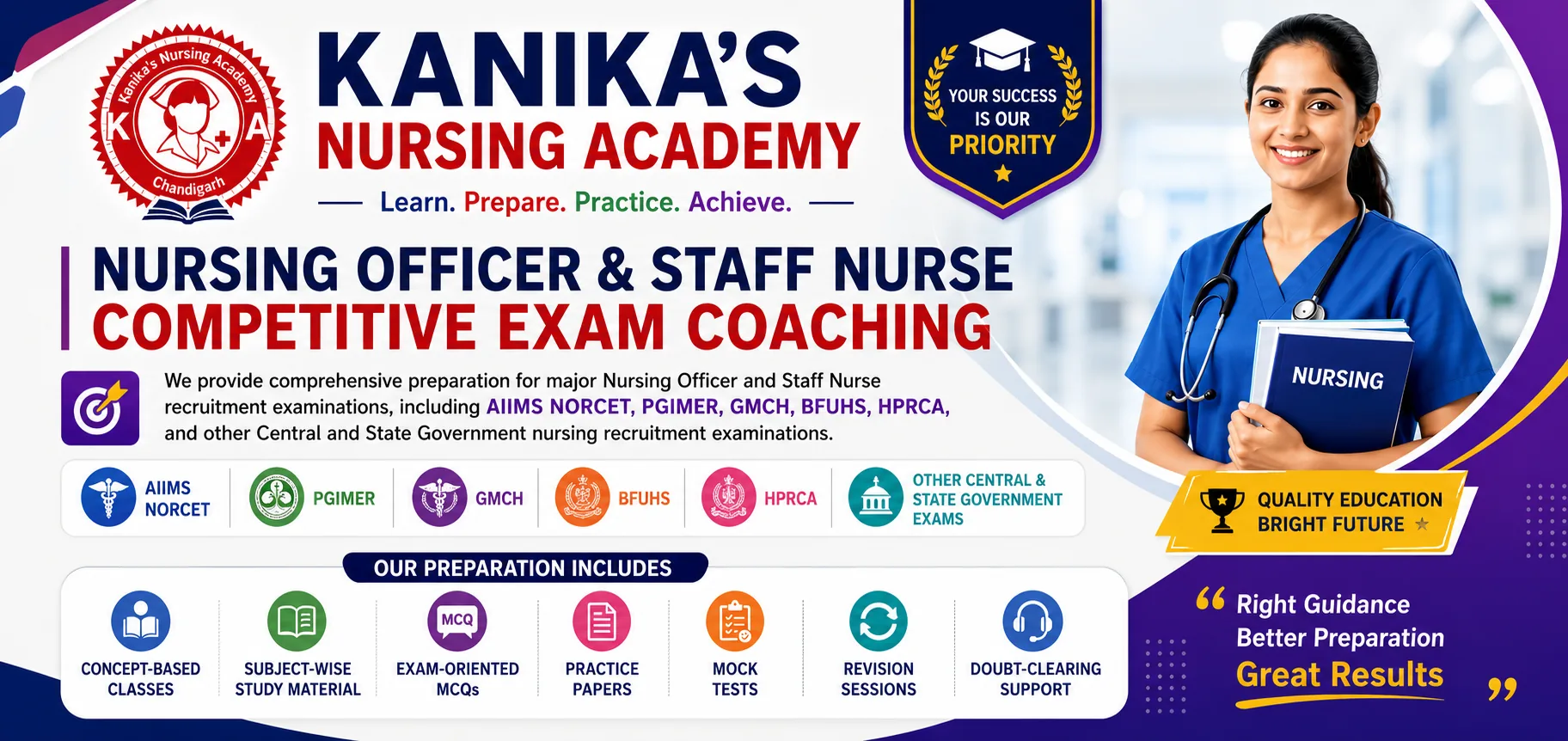
Concept-based, exam-oriented preparation for AIIMS NORCET, PGIMER, GMCH, BFUHS, HPRCA, and Central or State Staff Nurse recruitment.
Choose your examination to explore coaching options, free practice tests and the relevant published guides.
Explore NORCET coaching options, free nursing tests and examination guides.
Explore learning options Recruitment preparationFind PGIMER coaching options, mock tests and published examination guides.
Explore learning options Nursing SuperintendentExplore Railway Nursing Superintendent preparation and previous-paper practice.
Explore learning options Himachal PradeshFind Staff Nurse preparation, free nursing tests and relevant Himachal exam guides.
Explore learning options Chandigarh recruitmentExplore Nursing Officer coaching options, free practice and the published GMCH guide.
Explore learning options Punjab recruitmentExplore Staff Nurse learning options, free tests and BFUHS preparation guidance.
Explore learning options Undergraduate entranceCompare AIIMS, PGIMER, GMCH, BFUHS PPMET, AMRU and other entrance routes.
Explore learning options Progress after GNMExplore Post Basic nursing entrance routes and entrance preparation options.
Explore learning options Postgraduate preparationExplore postgraduate nursing entrance guides and available coaching information.
Explore learning options International nursingRead NCLEX-RN coaching information and enquire about current availability.
Explore learning options Healthcare EnglishExplore OET coaching for nurses and healthcare professionals.
Explore learning optionsNo matching exam. Try NORCET, PGIMER, RRB or B.Sc.
Find PGIMER coaching options, mock tests and published examination guides.
No payment required. Enter your details and verify your email to start a timed test.
Concept-based, exam-oriented preparation for AIIMS NORCET, PGIMER, GMCH, BFUHS, HPRCA, and Central or State Staff Nurse recruitment.
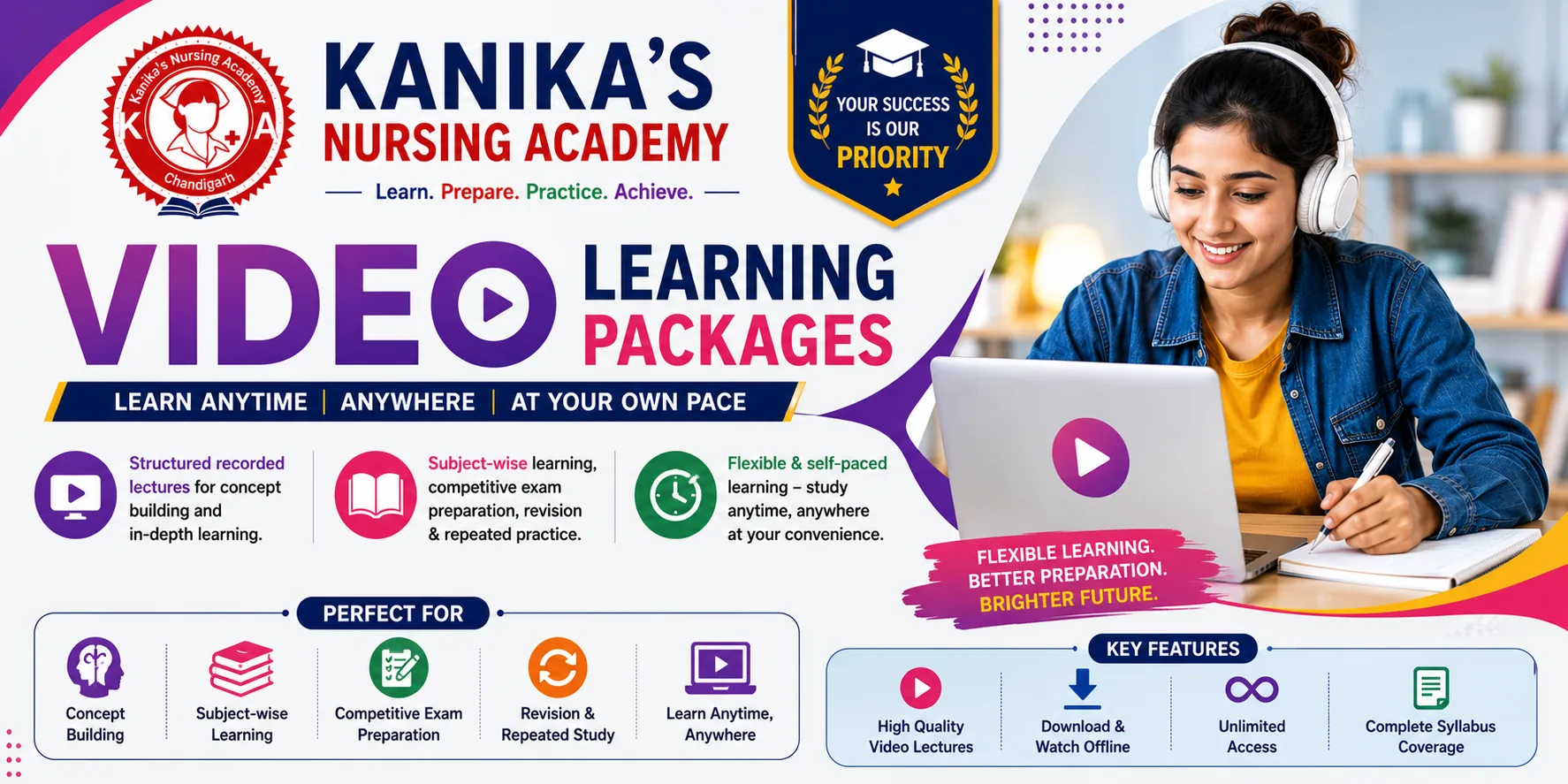
Self-paced recorded nursing lectures, MCQ practice, revision modules, notes, and exam guidance accessible from mobile or laptop.
Topic-wise, subject-wise, and full-length practice for Nursing Officer and Staff Nurse examinations with performance-focused revision.
Practise PGIMER previous papers and mock tests to identify weak topics before your next revision session.
Before the exam, check www.pgimer.edu.in for any notice that changes the syllabus or examination rules.
Use this guide alongside the PGIMER syllabus and preparation overview. The reference pattern below will help you plan practice sessions. Confirm the final rules in the official notice for your recruitment.
The reference pattern specifies 40 marks out of 100 for General and EWS candidates, and 35 for SC, ST and OBC candidates. For PwBD candidates, the minimum follows the applicable parent category. Reserved category candidates applying for an unreserved position must meet the 40% standard.
Reaching the qualifying mark does not guarantee selection. Candidates must also be shortlisted for document verification.
The reference shortlisting ratio is three candidates for each advertised vacancy in a category, with candidates tied at the boundary also included. For example, 66 OBC vacancies would give a base shortlist of 3 × 66 = 198 candidates, plus any applicable ties. Being called for document verification is not the same as being selected.
Score = correct answers × 1 − wrong answers × 0.25. Unanswered questions add no marks and carry no penalty.
Avoid guessing without a reason. Read the options carefully and use what you know to rule out unlikely answers. Always follow the marking rules printed on your actual examination instructions.
The reference rules apply these checks in order:
PGIMER bases the syllabus on the prescribed nursing qualification. It does not provide a fixed allocation of questions for each topic.
Practical meaning : The exam is purely based on Nursing curriculum taught in B.Sc Nursing / Post Basic B.Sc Nursing / GNM (General Nursing & Midwifery) courses. There is no separate portion for General Knowledge, Reasoning or English (unless corrigendum is issued later specifying otherwise). Candidates should check PGIMER’s website for any addendum before the exam.
Use the nursing subjects below as a revision checklist. They follow the core nursing curriculum and are preparation guidance, not an official allocation of questions by topic.
Documentation & nursing process
Monitoring of vital signs
Infection control & asepsis
Personal hygiene and comfort measures
Positioning, movement and body mechanics
Wound Care and Dressing Techniques
Giving medicines (how to give, calculating doses, safety)
Specimen collection
Structure and function of body systems (eg cardiovascular, respiratory, digestive, neurological, musculoskeletal, endocrine, renal, reproductive)
Homeostatic processes
Disorders nursing management: cardiovascular, respiratory, GI, renal, endocrine e.g. diabetes, neurological, musculoskeletal
Nursing care before and after surgery
Oncology Nursing Fundamentals
Emergency & critical care nursing (ICU/CCU principles, triage)
Fluid and electrolyte balance
Antenatal, intranatal and postnatal care
Normal Labour and Delivery Process
Conditions of high-risk pregnancy
Methods of birth control
Gynaecological diseases & nursing care
Growth & development milestones
National Immunisation Program: immunisation schedule
Nutritional diseases in children
Common paediatric diseases and nursing management
Neonatal care
National health programmes, including NHM, RCH and programmes for TB, leprosy and malaria
Primary Health Care Strategy (PHCS)
General epidemiology
Environmental sanitation and health education
Maternal and Child Health (MCH) services;
Psychiatric Disorders (anxiety, depression, schizophrenia)
Techniques of Therapeutic Communication
Crisis response
Psychopharmacology 101
Nursing theories and models
Management of Ward/Unit
Ethics in nursing, patient rights and legal aspects
Quality assurance and patient safety
The basic research process
Methods of Sampling
Presentation & Analysis of Data
Microbiology (infection control related)
Pharmacology (drug categories, calculating dosage, negative effects)
Pathology (fundamental disease mechanisms)
Nutrition & Dietetics
Take a short timed test with instant scoring, accuracy and question-wise review.

Offline Nursing Officer coaching starts 7 December 2026. Ask about the classroom, timetable, regular tests and…
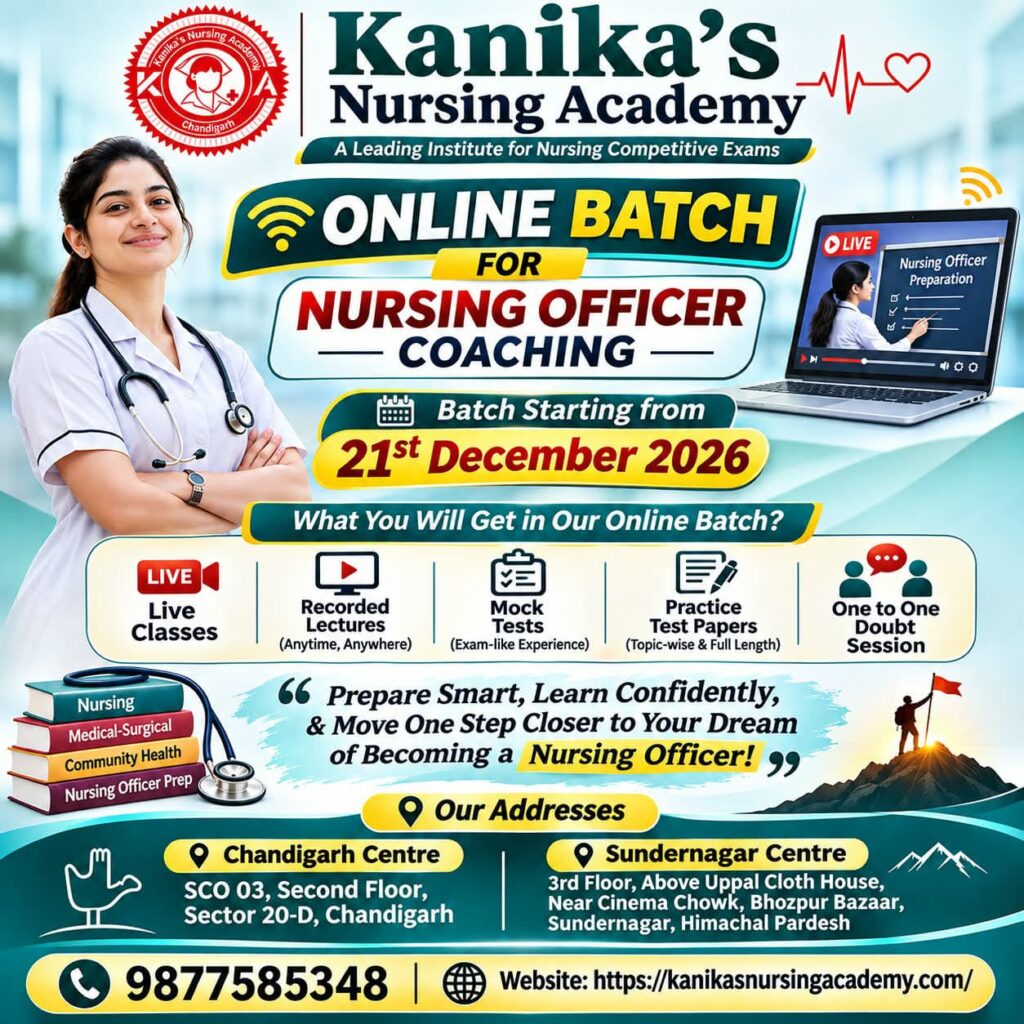
Online Nursing Officer coaching starts 21 December 2026, with live classes, recordings, mock tests, practice papers…
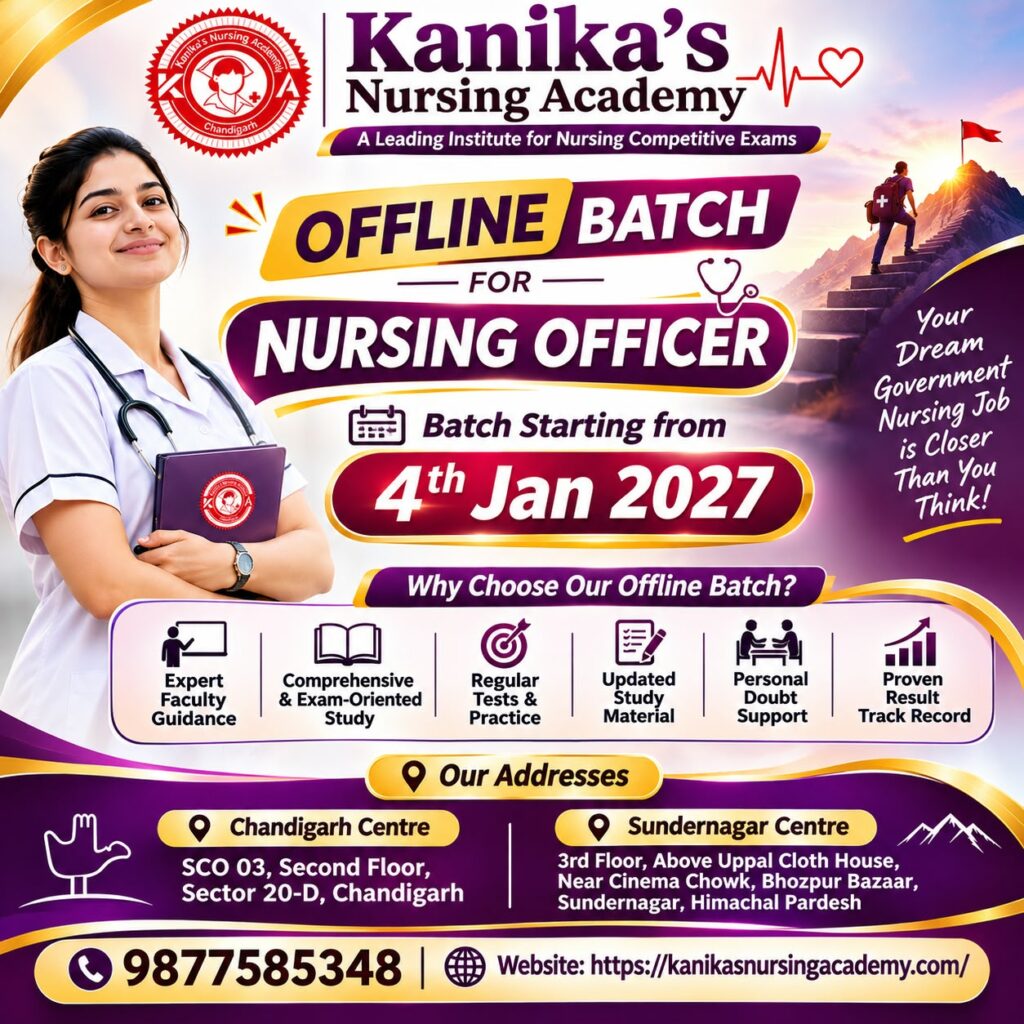
Offline Nursing Officer coaching starts 4 January 2027. Ask about classroom teaching, nursing subjects, regular tests,…
Find the right support